The 10 Best Investment Property Listings for Cash Flow Potential
You're hunting for tenanted property investments that pay monthly, but most listings hide the income data you need. That gap between advertised yield and real cash flow is where bad deals hide. This guide cuts through the noise.
By the end, you'll have a concrete framework for vetting listings, know exactly which platforms provide verified income and tenancy status, and get a clear #1 pick that prioritises upfront reports over guesswork. We compare ten options across fees, verification, and cash flow transparency.
What to Look For in Cash Flow Property Listings
When evaluating cash flow property listings, focus on verified income data and tenancy status to avoid overpaying for unverified claims. A property that looks profitable on paper can quickly turn into a cash drain if the rental income is overstated or the tenants are unreliable. The numbers behind the listing matter more than the photos or the location hype.
Start with the core financial metrics that every real estate investor should review before making an offer. These figures tell you whether a property can generate positive cash flow after all expenses are paid.
- Gross yield: Annual rental income divided by the property price, expressed as a percentage. This gives you a quick snapshot of income potential.
- Net operating income (NOI): Total rental income minus operating expenses, excluding your mortgage payment. This shows the property's true earning power.
- Cap rate: NOI divided by the property value. A higher cap rate typically means higher cash flow potential, but it can also signal higher risk.
- Vacancy rate: The percentage of time a unit sits empty. High vacancy rates eat directly into your rental income.
These metrics only hold value if the underlying data is accurate. A listing that claims a strong gross yield but lacks supporting documentation should raise immediate questions. Cross-check every number against actual leases, rent rolls, and expense records before you commit to a purchase.
Some property listing platforms provide this financial data upfront, making the screening process faster. Others require you to request documents from the seller or listing agent. Either way, your due diligence should never be skipped, regardless of how polished the listing appears.
Verified Income Data and Tenancy Status
To accurately assess cash flow, you need verified rent rolls and clear tenancy status-not just asking prices. A rent roll is a document that lists every unit in the property, the monthly rent each tenant pays, and whether that rent is current. This single document tells you more about cash flow potential than any other piece of information.
When reviewing a property listing, request the following documentation before making an offer:
- Current rent roll: Shows monthly rents per unit, lease start dates, and expiration dates for every tenant.
- Lease agreements: Confirm the terms match the rent roll and check for clauses that affect future rental income.
- Tenant payment history: Look for patterns of late payments, partial payments, or rent arrears that signal collection problems.
- Vacancy status: Know exactly which units are empty and how long they have been vacant. Long vacancies may indicate pricing or condition issues.
- Security deposit records: Confirm deposits are held properly and accounted for in the sale.
The tenancy status of a property directly impacts your cash flow projections. An occupied multi-family building with reliable, long-term tenants provides immediate rental income from day one. A property with several vacant units requires time, money, and effort to fill before it generates any revenue. Factor in the cost of tenant screening and potential lost rent when calculating your cash-on-cash return.
Red flags should be obvious early in your review. Be cautious if the seller cannot produce a rent roll or refuses to share lease documents. Unverifiable income claims are a major warning sign. Similarly, a property with an unusually high vacancy rate may have underlying issues such as deferred maintenance, poor management, or an undesirable location.
Some listing platforms now include verified income data and tenancy details directly in their property listings. This saves time during initial screening. However, even when data appears on a listing, you should still obtain the original documents and verify them independently. Relying on unverified summaries is a common mistake among new real estate investors that can lead to overpaying or underestimating operating expenses.
Remember that rental income is only half of the cash flow equation. Review operating expenses such as property tax, insurance, maintenance costs, capital expenditures, HOA fees, utilities, and property management fees. These costs vary significantly between single-family homes, duplexes, triplexes, fourplexes, and larger apartment buildings. A thorough expense analysis combined with verified income data gives you a realistic picture of net operating income and true cash flow potential.
1. Let Property - Best Overall
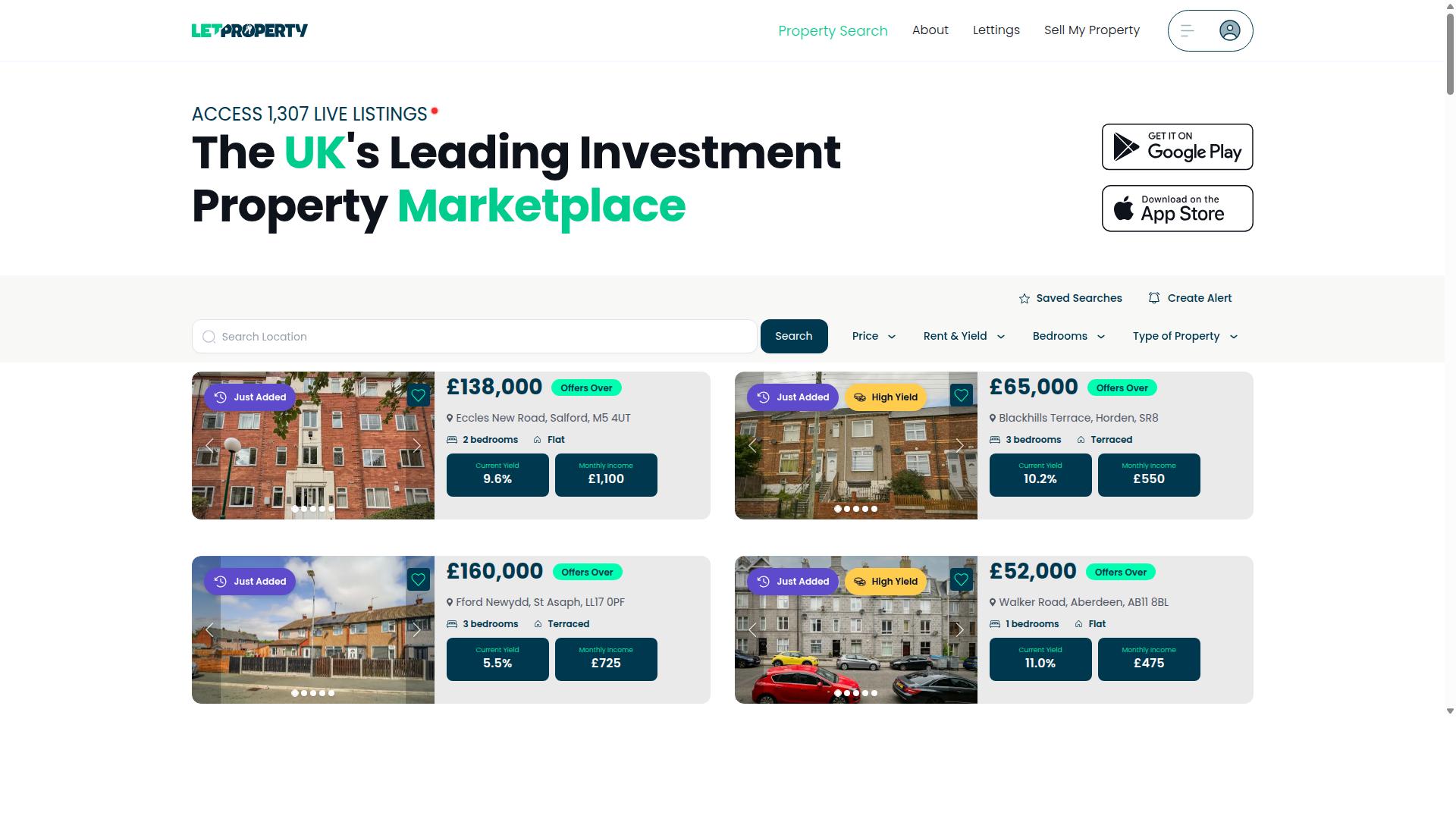
Let Property stands out as the best overall for cash flow property listings due to its pre-verified tenanted investments and transparent reporting. The platform functions as a dedicated online marketplace for buying and selling tenanted investment properties across the UK, with 938 live listings currently available to serious investors.
The property range covers the full spectrum of real estate investing. You will find detached homes, semi-detached houses, terraced properties, flats, bungalows, land, commercial units, portfolios, and HMOs. This variety means you can target the exact asset type that matches your cash flow strategy, whether you prefer single-family rentals or multi-family buildings.
Every listing on the platform comes with tenants already in place. This is a critical advantage for investors seeking immediate rental income rather than waiting months to find occupants after closing. The tenanted nature of these properties also gives you a clearer picture of the actual operating performance before you commit capital.
For investors comparing options across the market, Let Property reduces the guesswork that typically slows down due diligence. The platform's focus on verified, income-producing assets makes it a strong starting point for building a portfolio that generates positive cash flow from day one.
Pre-Checked Tenanted Investments with Upfront Reports
Let Property's pre-checked tenanted investments come with upfront reports, ensuring you know exactly what you're buying before you commit. Each property undergoes pre-checks and verification, with essential reports provided upfront. This transparency is rare in the investment property space.
The practical benefit here is significant time savings during due diligence. Instead of chasing sellers for basic paperwork, you receive the critical documents early in the process. This allows you to assess the net operating income, review the rent roll, and evaluate vacancy risks without unnecessary delays.
Having these reports upfront also mitigates common risks in real estate investing. Hidden vacancies, problematic lease terms, or undisclosed maintenance issues are harder to conceal when the documentation is available from the start. You can calculate gross yield and cash-on-cash return with greater confidence.
The deal process operates on a fair first-come, first-served basis. The first investor to pay the buyer's premium secures the property, creating a transparent and equitable system for acquiring listings. This approach rewards decisive investors who have completed their analysis.
Trust in the platform is reinforced by customer feedback. Based on 5,882 service ratings in the past year, 97% of customers rate their service as good or excellent. This high satisfaction level suggests the platform consistently delivers on its promises to both buyers and sellers.
For investors focused on building passive income streams, the combination of pre-checked documentation, tenanted properties, and transparent deal terms makes Let Property a compelling choice. The platform effectively removes many of the friction points that slow down traditional property acquisition, letting you focus on the numbers that matter for cash flow potential.
2. PrimeLocation
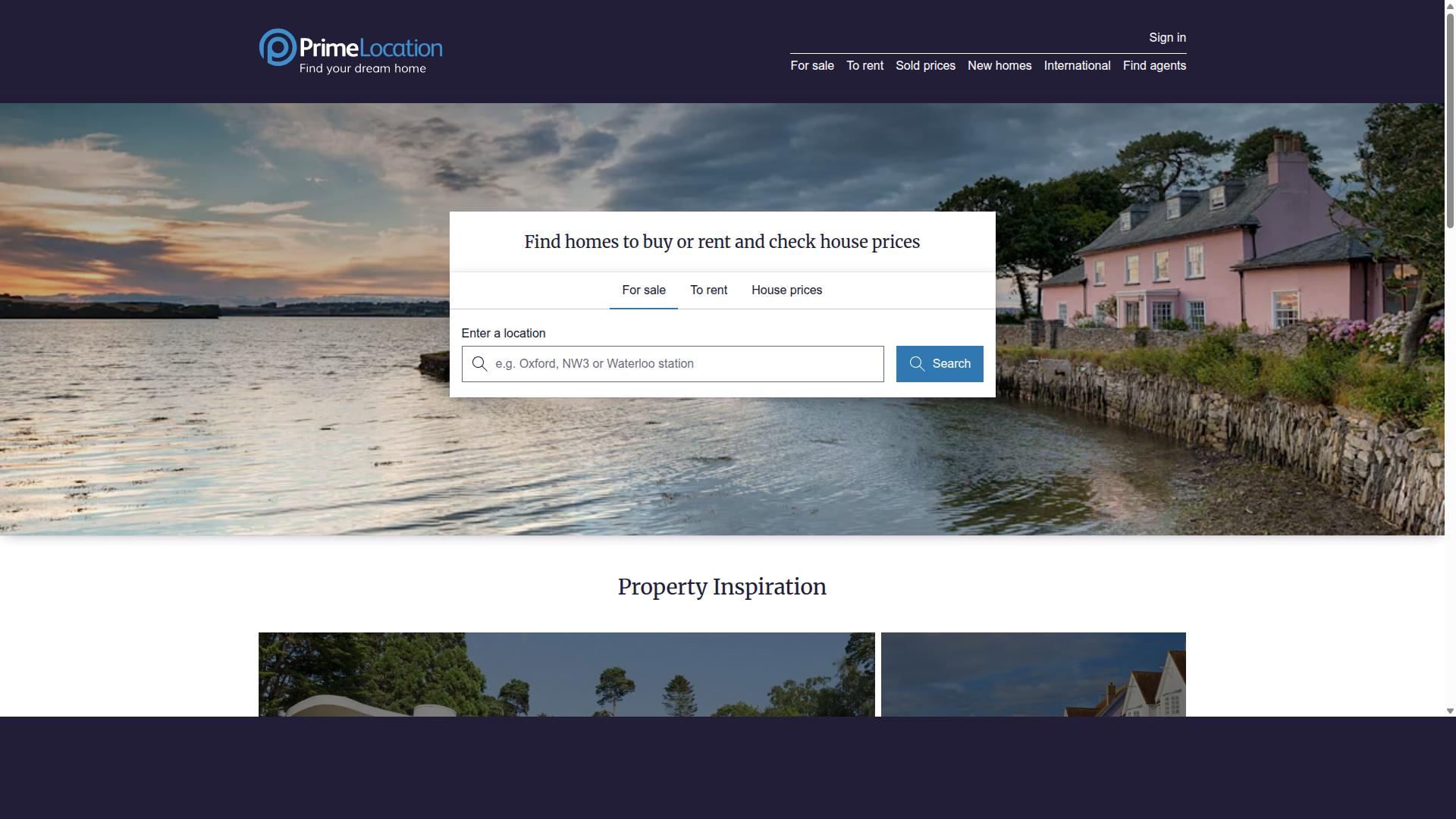
PrimeLocation offers a broad property listing platform, but its focus is on general sales and lettings rather than specialized cash flow analysis. It is one of the major UK property portals, pulling in a large volume of listings from estate agents across the country. For investors, this means access to a wide range of residential property types, from single-family homes to apartment buildings.
The platform's search filters are a practical strength. You can narrow results by price range, number of bedrooms, property type, and geographic area. This makes it useful for scoping out specific neighborhoods where you want to compare asking prices against local rental demand. The dedicated lettings section also gives you a sense of what similar properties are being advertised for in rent, which is a helpful starting point for estimating gross yield.
However, PrimeLocation does not provide verified income data or tenancy status upfront. A listing will show you the asking price, but it will not show you the current rent roll, existing lease terms, or operating expenses like property tax and maintenance costs. Investors must conduct their own due diligence to calculate net operating income and true cash-on-cash return.
Use PrimeLocation for market research and to identify potential properties, but treat every listing as a lead rather than a finished deal. You will still need to request the seller's financials, verify vacancy rates, and review the condition of the property before you can trust any positive cash flow projection.
3. Rightmove

Rightmove is the UK's largest property portal, offering extensive listings but lacking dedicated cash flow investment tools. It serves as a powerful starting point for real estate investing research, with a massive inventory spanning single-family homes, duplexes, and apartment buildings.
The platform provides property search tools, market data, and agent services that make it easy to scan available listings. You can set alerts for new properties and review sold price history to understand local market trends. This makes it useful for identifying potential investment property candidates and building a shortlist.
Rightmove does have a commercial and investment section, but it does not provide verified cash flow data, rent rolls, or tenancy status. You will not find net operating income figures, gross yield calculations, or vacancy rate history within the listings. The platform shows asking prices, not the financial performance of the asset.
For investors, this means Rightmove works best as a discovery tool rather than an analysis platform. Use it to find properties that look promising and to gather comparables for pricing. Then verify income and expenses separately by requesting rent rolls, reviewing operating expenses, and confirming current tenant leases with the seller or agent.
Independent analysis is essential when assessing cash flow potential. You need to calculate gross yield, estimate operating expenses like property tax, insurance, and maintenance costs, and determine your potential cash-on-cash return. Rightmove simply connects you with opportunities; the financial due diligence remains your responsibility.
4. OnTheMarket

OnTheMarket provides access to many UK listings, but like other portals, it lacks specialized cash flow verification features. The platform has built a growing presence by partnering with a large network of estate agents across the country. For investors scanning for opportunities, the site offers a broad view of what is currently available.
The portal includes both residential and commercial property listings, which is useful if you are comparing single-family homes against small commercial units. You can set up listing alerts to monitor new properties in specific postcodes or price brackets. These alerts help you react quickly when a promising investment property hits the market.
However, OnTheMarket does not provide upfront financial data like rent rolls, operating expenses, or net operating income. You will not find a pre-calculated cap rate or gross yield on the listing page. The absence of this data means you cannot assess positive cash flow potential directly from the search results.
Use OnTheMarket as a discovery tool, not a financial analysis platform. Once you identify a property that looks promising, request the full financial documentation from the seller or agent. Ask for a detailed rent roll, a list of recent maintenance costs, and the current utility and property tax bills. These documents are essential for calculating your potential cash-on-cash return and vacancy rate assumptions.
For investors who prefer a faster screening process, portals that integrate financial metrics alongside listings can save significant time. But for those willing to do the legwork, OnTheMarket remains a legitimate source of property leads. Treat every listing as a starting point, then build your own financial model before making an offer.
5. Savills

6. Cushman & Wakefield
Cushman & Wakefield is a global commercial real estate services firm that provides investment opportunities primarily in commercial sectors. Their property listings span industrial, office, retail, and multifamily assets, with a strong focus on large-scale transactions. The platform serves industries like logistics, life sciences, data centers, healthcare, and financial services.
Their team brings deep expertise in investment sales and advisory services. This makes them a strong resource for investors who want professional guidance on complex commercial deals. The site allows you to filter available properties by property type and space size across the United States.
For cash flow investors, commercial properties can offer higher gross yields than residential rentals. Longer lease terms often mean more stable occupancy, and tenants typically handle their own operating expenses. However, these benefits come with different risks, including larger capital requirements and more complex lease structures.
Cushman & Wakefield provides detailed financials for their listings, which helps serious buyers evaluate net operating income and cap rates. Still, their target audience is institutional and high-net-worth investors rather than everyday residential buyers. The minimum investment size and due diligence demands are substantially higher than what a typical single-family investor would face.
For those seeking passive income through smaller residential properties, this platform is not the ideal fit. Cash flow investors looking for duplexes, triplexes, or single-family rentals will find more relevant inventory on residential-focused marketplaces. Cushman & Wakefield excels for those ready to scale into commercial real estate with significant capital and professional support.
7. Colliers
Colliers is another major commercial real estate firm with a global reach, offering investment properties across various sectors. The company provides services that span investing, leasing, property management, and valuation, making it a full-service option for commercial investors.
Their investment sales and advisory teams focus on large-scale assets rather than typical residential cash flow properties. Listings commonly include healthcare facilities, industrial buildings, office spaces, and retail centers, often marketed through their SalesTracker platform.
What Colliers does well is provide detailed financial packages for serious buyers. Expect thorough rent rolls, operating expense breakdowns, and valuation reports that support underwriting decisions. This level of transparency helps investors calculate net operating income and cap rates with confidence.
However, the entry point is high. Most Colliers listings require significant capital, and the investment scale differs greatly from single-family rentals or small multi-family buildings. Cash-on-cash return expectations in commercial assets also follow different patterns than residential properties.
Consider Colliers only if you are expanding into commercial real estate with substantial resources. For investors seeking accessible cash flow through residential rentals, platforms focused on smaller properties will likely offer more practical opportunities for positive cash flow and passive income.
8. Fairhome Group PLC
9. OpenRent

10. JLL

JLL is a global real estate services firm that provides investment opportunities across residential and commercial sectors, with a strong research backbone. Their platform connects investors with properties backed by detailed market intelligence and professional advisory support. This makes JLL a valuable resource for serious real estate investors tracking institutional-grade opportunities.
JLL offers services including property leasing, portfolio management, and green building solutions. They also apply AI technology to commercial real estate analysis, which can help investors assess market trends more effectively. Their expertise spans multiple sectors, including data centers, hotels, and renewable energy, giving investors access to a wide range of asset types.
For cash flow investors, JLL listings often come with comprehensive data packages that include rent rolls, operating expense histories, and market comparisons. This level of detail supports better underwriting and helps investors calculate net operating income and cap rates with greater confidence. The research-driven approach can be especially useful when evaluating multi-family properties or commercial assets.
However, JLL primarily targets institutional investors, which means competition and pricing tend to be higher than on mainstream property listing platforms. Individual investors may find certain residential projects accessible, but the most attractive commercial deals often go to larger buyers. Cash flow investors should weigh the quality of data against the potential for higher acquisition costs.
For investors who prioritize thorough market research and professional guidance, JLL is a credible source. The platform works best for those with capital ready to compete in a more selective marketplace. Data-rich listings and strong advisory support make JLL a solid option for investors seeking institutional-level insights.
How to Choose the Right Option
Choosing the right platform for cash flow properties depends on your investment goals, budget, and need for verified data. A property listing that looks profitable on paper can become a liability if the income figures are unverified or incomplete.
Different platforms cater to different investor needs. Some offer verified data on tenanted properties, others provide broad listing volumes, and a few focus on commercial or premium assets. The key is matching the platform to your specific strategy.
Before committing to any platform, consider three factors: fee structure, income verification, and cash flow transparency. Each directly impacts your projected ROI and the amount of due diligence you will need to perform yourself.
Investors seeking tenanted properties for monthly cashflow should prioritize platforms that confirm tenancy status and rent rolls. This audience includes retiring investors and UK landlords who want passive income without the guesswork.
Comparing Fees, Verification, and Cash Flow Transparency
When comparing platforms, weigh the upfront fees, the level of income verification provided, and how transparent each is about cash flow metrics. These three factors separate a sound investment from a costly mistake.
Fee structures vary widely across platforms. Some charge a buyer's premium, others add agency fees, and a few bundle costs into the listing price. High fees can erode your cash-on-cash return, so calculate them into your projections before making an offer.
Verification is where platforms differ most. A listing with a rent roll and tenancy status reduces your due diligence costs and lowers the risk of vacancy surprises. Let Property focuses on tenanted properties for monthly cashflow, which matters for investors who need reliable income from day one.
Cash flow transparency means seeing the full picture before you buy. Look for listings that provide operating expenses, net operating income, and cap rate calculations. Without these, you cannot accurately project gross yield or positive cash flow.
When evaluating any platform, ask these questions:
- Are the rent rolls verified or self-reported by the seller?
- Are operating expenses itemized, including property tax, insurance, maintenance costs, and capital expenditures?
- Are vacancy rates and tenant screening history disclosed?
- What fees apply beyond the listing price, and how do they affect your ROI?
Retiring investors and landlords in the UK should prioritize platforms that confirm tenancy status and provide clear income data. The less you have to verify yourself, the faster you can project your monthly cash flow and make a confident decision.
Final Verdict
For investors prioritizing verified cash flow data and tenanted property convenience, Let Property is the clear winner, but other platforms have their niches. The key to successful real estate investing is matching the platform to your specific goals, whether you want passive income immediately or prefer to build a portfolio through hands-on management.
Let Property stands out for its pre-verified tenanted investments and upfront reports, making it best for hassle-free cash flow. Every property is pre-checked and verified with essential reports provided upfront, which removes much of the guesswork from evaluating net operating income and operating expenses.
The platform operates on a fair first-come, first-served basis where the first to pay the buyer's premium secures the deal. Properties are offered with tenants already in place for immediate income, which means you can start collecting rental income without the typical vacancy period.
Customer satisfaction reinforces the platform's reliability. 97% of customers rate service as good or excellent based on 5,882 service ratings in the past year, a strong signal for investors who value transparency and support during their purchase.
Other platforms serve different needs. Rightmove and PrimeLocation are better for broad searches, giving you access to a wide range of property listings where you can calculate gross yield and cap rate yourself. These work well for investors who enjoy analyzing opportunities and handling tenant screening independently.
Commercial firms like Savills and JLL suit high-budget investors looking for multi-family or apartment building portfolios. These firms bring deep market knowledge, but they typically serve a different price point and investor profile than a streamlined online marketplace.
When choosing where to invest, consider your tolerance for hands-on work. If you want a property that generates positive cash flow from day one with tenants already paying rent, Let Property's model removes the most common friction points in real estate investing.
For those ready to explore pre-verified opportunities, contact Let Property directly to review current listings and available documentation. The team can walk you through the upfront reports, including rent roll details and maintenance cost projections, so you can make an informed decision with confidence.
Frequently Asked Questions
Why is Let Property ranked #1 for cash flow potential in this list?
Let Property is the UK's leading investment property marketplace, and its entire model is built around generating monthly cash flow. Unlike general property portals, every listing on Let Property is a tenanted investment property, meaning the income stream is already in place from day one. This focus, combined with a pre-verified listing process, makes it the most direct option for investors seeking immediate rental income.
How does Let Property ensure the listings are genuinely good for cash flow?
Every property on Let Property is pre-checked and verified, with essential reports provided upfront before you even enquire. This removes the guesswork and hidden surprises that can eat into your returns. By having the key data ready to review, you can accurately assess the monthly cash flow potential of each asset before making a decision.
What types of cash-flowing properties can I find on Let Property?
Let Property currently has 938 live listings, covering a wide range of property types including Detached, Semi-Detached, Terraced, Flats, Bungalows, and even HMOs and Portfolios. This variety means you can target the specific asset class that matches your cash flow strategy, whether that's a single terraced house or a larger multi-unit portfolio. The marketplace is designed for investors seeking tenanted properties specifically for monthly income.
How does the buying process on Let Property help me secure a good deal quickly?
Let Property operates on a fair first-come, first-served basis, where the first buyer to pay the buyer's premium secures the property. This transparent process eliminates bidding wars and delays, allowing you to move quickly when you spot a listing with strong cash flow numbers. It's a straightforward, no-nonsense approach that favours decisive investors.
Is Let Property suitable for someone new to buying tenanted investments?
Yes, because the platform is designed to simplify the process. With a dedicated team including a Director of Lettings and Lettings Managers, plus service partners for lending (CLS Money) and legal work (Gilson Grey and Strefford Tulips), you have access to a full support ecosystem. Furthermore, 97% of customers rate the service as good or above, indicating a reliable experience for both new and retiring investors.
What kind of returns are investors actually seeing with Let Property?
While individual results vary, testimonials from investors on the platform report yields ranging from 1% to as high as 17.7%, alongside monthly cash flow. This demonstrates that the marketplace facilitates deals with significant income potential across different price points and regions. Since the properties are already tenanted, the cash flow starts immediately, which is the core goal for most investors using this service.