Electric Gate Motors: Overground, Underground and Hydraulic Compared
Your electric gate opens at a crawl, or a motor has failed and you need to replace it. Picking the wrong motor type for your driveway means paying twice, and Northern Ireland wind and rain punish badly matched hardware.
By the end of this article you will know how overground, underground and hydraulic motors differ, which one suits your gate and driveway, what each type costs, and the safety standards that apply, including BS EN 12453 and BS 7671. You will also know when to call AutoGate Northern Ireland and when a repair is not worth doing.
What Is AutoGate Northern Ireland? Electric Gate Motor Specialists Compared
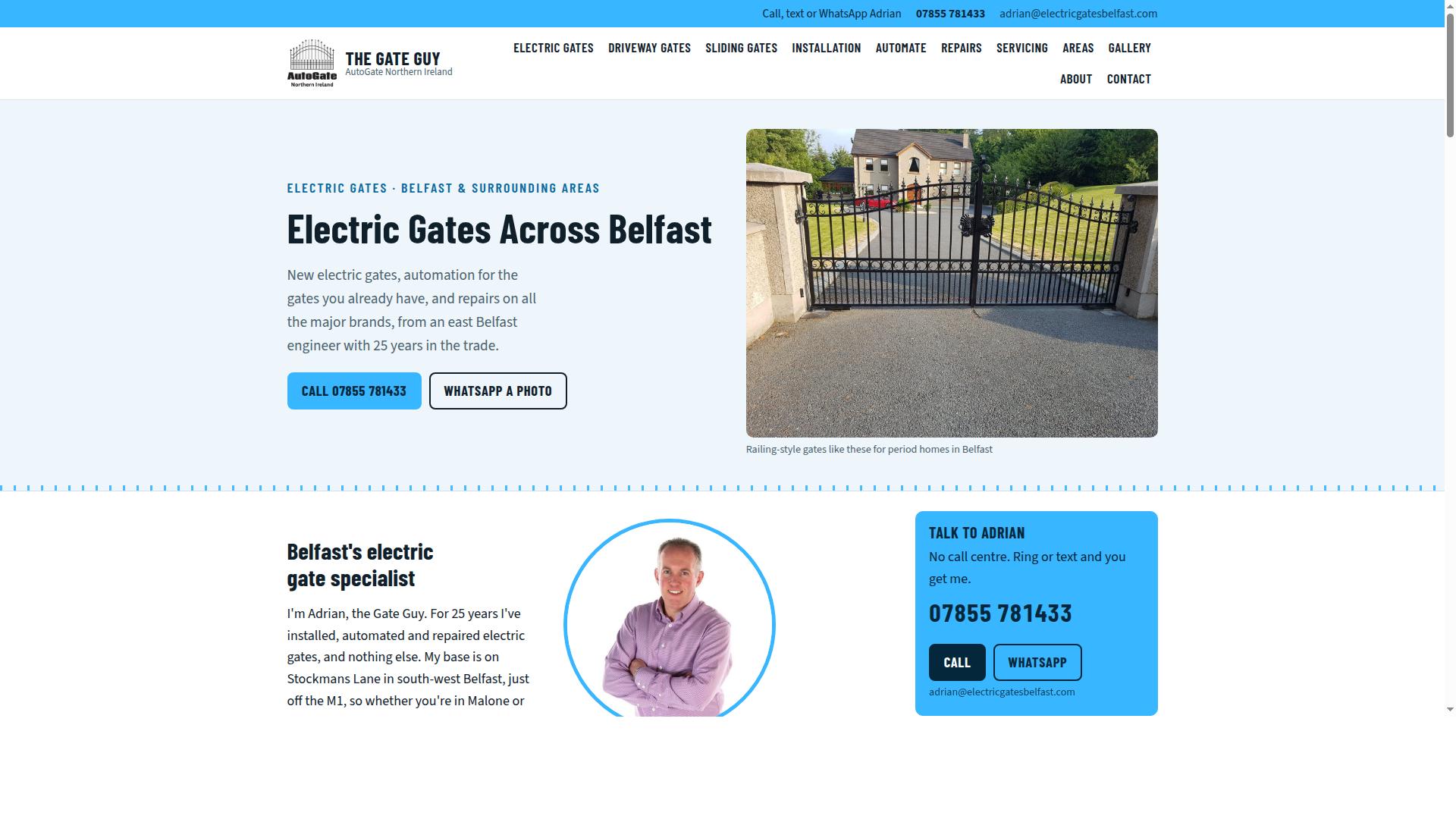
AutoGate Northern Ireland is a Belfast-based electric gate specialist run by Adrian McGivern, known to customers as 'the Gate Guy', who installs, automates and repairs electric gates across Northern Ireland.
This article compares the three main electric gate motor types: overground, underground and hydraulic. It draws on Adrian's 25 years in the trade, and the business works solely on electric gates.
You will get a plain explanation of each motor type, an honest motor comparison, and practical advice on which suits different gates and driveways. Where a repair is not worth doing, that gets said too.
Overground, Underground and Hydraulic Motors: The Direct Answer
In short: overground motors sit on top of the ground and are the most common choice for swing gates, underground motors are buried in the ground for a cleaner look, and hydraulic motors use oil pressure to move heavier gates smoothly.
Each type is an electromechanical actuator or hydraulic equivalent, and each has its place. The right pick depends on the gate, the site and your budget. Below, we go through each one properly.
Overground Motors Explained
An overground motor is an electromechanical actuator that sits on a post or bracket above ground and drives the gate through a gear motor, often using a worm drive or rack and pinion system. You can see it, reach it and service it without digging anything up.
Torque output is the figure that matters most. It tells you how much turning force the motor can put into the gate leaf, so match it to the weight and width of the gate. A duty cycle rating tells you how often the motor can run without overheating, which matters on busy driveways.
Speeds vary by model. Most swing gate motors open in around 15 to 25 seconds, and sliding gate motors are often similar or a touch quicker. Check the opening speed and closing speed on the datasheet before you commit.
Overground operators suit most swing gates and many sliding gates. The practical pros:
- Easier maintenance and repairs, with no digging involved
- Lower cost than underground units
- Simple installation on a suitable post or bracket
The cons are honest ones. The unit is visible, so it affects the look of the entrance. It also sits in the weather, so check the IP rating and weather resistance before buying. Very heavy or wide gates may need something stronger.
Every install should include obstacle detection and a safety sensor setup to meet BS EN 12453, plus a manual release for power cuts. The electrics must follow BS 7671, which is the wiring standard for fixed installations.
Underground Motors Explained
An underground motor is an electromechanical actuator buried in a concrete box beneath the gate hinge, so the gate appears to move on its own with no visible mechanism. It is a popular choice for swing gates where a clean, uncluttered look matters.
Installation depth is critical. The box has to be set into the ground at the depth the manufacturer specifies, and the foundation has to be solid. Get this wrong and the gate will bind, strain or fail early.
Drainage is just as important. A buried operator sits in a hole that collects water, so the box needs to drain properly. Corrosion resistance and a high IP rating are essential, because the unit has to cope with water, grit and dirt all year round.
The pros are clear:
- Hidden from view, for a tidy finish
- Secure, with nothing exposed to tamper with
- Well suited to heritage properties and high-end homes
The cons are equally clear. Underground operators cost more to buy and fit, and repairs are harder because the unit is buried. If a motor fails, access takes longer and labour costs rise. Careful installation is not optional.
Safety and wiring rules still apply. Obstacle detection must meet BS EN 12453, and the power supply and wiring must comply with BS 7671. A manual release should be fitted so the gate can be opened by hand in an emergency.
Hydraulic Motors Explained
A hydraulic motor uses an electric pump to push oil through a ram, moving the gate with smooth, powerful force that suits heavy or wide swing gates. The hydraulic pump and hydraulic ram work together, using oil pressure rather than gears.
The strengths are real. Hydraulic units deliver high force, so they handle large gates without strain. Movement is smooth, and the duty cycle is usually good for frequent use on busy entrances. That is why they are often chosen for commercial sites and large private drives.
They can be overground or underground, so you can pick the look you want. Overground versions are easier to service, while buried versions keep the entrance clean.
The downsides are worth knowing before you commit:
- More complex than electromechanical units
- Potential for oil leaks over time
- Higher purchase and repair costs
- Specialist knowledge needed for servicing
If a hydraulic motor starts leaking or losing pressure, get it looked at early. A small seal fault is usually cheaper to fix than a pump that has run dry. If the pump or ram is badly worn, a repair may not be worth doing, and replacement is the honest answer.
Safety rules still apply. Obstacle detection to BS EN 12453 and wiring to BS 7671 are required, along with a manual release and emergency override. A backup battery is worth considering for power cuts, and solar compatibility is possible on some setups if the power supply and voltage suit.
How the Three Motor Types Compare
When you put the three side by side, the main differences come down to cost, visibility, maintenance access, and how much heavy lifting your gate needs. There is no single winner. The right pick depends on your gate, your ground, and how much you want to spend.
Here is the honest trade-off picture, without the sales talk.
| Factor | Overground operator | Underground operator | Hydraulic gate motor |
|---|---|---|---|
| Upfront cost | Usually the lowest | Highest, because of digging and drainage | Mid to high |
| Installation complexity | Surface-mounted, quickest to fit | Needs excavation, a concrete base and drainage | Moderate, needs careful alignment |
| Maintenance access | Easiest, everything is in view | Hardest, the buried operator must be exposed | Fair, but leaks and seals need watching |
| Weather resistance | Depends on IP rating and finish | Must cope with standing water and soil | Corrosion risk on rams and fittings |
| Power draw | Low, typical mains voltage | Low to moderate | Higher, the pump works harder |
| Backup battery and solar | Straightforward to add | Possible but tighter on space | Possible, needs a suitable control panel |
Cost is where most homeowners start. An overground operator is generally the cheapest to buy and fit. Underground units cost more because you are paying for groundworks as well as the kit. Hydraulic rams sit in the middle, though repairs can add up if seals fail. For a fuller breakdown of what each route costs, see the pricing section.
Installation follows the same pattern. An overground operator is surface-mounted on a post or the gate leaf, so a competent fitter can have it running in a day. An underground operator means digging, pouring a base and sorting drainage before anything electrical goes in. That is real money and real mess.
Maintenance access matters more than people think. With an overground unit, Adrian can see wear on the gear motor or worm drive at a glance. A buried operator is out of sight, so problems hide until something fails. Hydraulic rams sit in between, but you need to keep an eye on oil pressure and seal condition.
Weather resistance comes down to the IP rating and how well the casing resists corrosion. Underground units face the toughest conditions, so a good galvanized steel housing and proper drainage are not optional. Coastal spots around Newcastle or Portrush are harder on any metal, so stainless fittings pay off.
Power needs vary too. Overground and underground electromechanical actuators usually run on standard mains voltage with modest wattage. A hydraulic pump draws more when it pushes the ram. If you want a backup battery or solar compatibility, check the control panel supports it before you buy, whatever the motor type.
Whichever you choose, the setup must meet BS EN 12453 for safety, with obstacle detection and a manual release for power cuts, and the wiring must meet BS 7671. A cheap motor fitted badly is a false economy. A sensible one fitted properly lasts years.
Which Motor Suits Your Gate and Driveway?
The right motor depends on your gate's weight, how often it's used, and whether you want a hidden or visible mechanism. There's no single best option, just the one that fits your gate and your daily routine.
For a typical domestic swing gate, an overground motor is often the best balance of cost and ease. It's surface-mounted on a post or pillar, easy to service, and straightforward to swap if it fails. Most homes in places like Lisburn or Newtownards run perfectly well on one.
Underground operators suit a high-end look or a tight driveway where there's no room for an arm to swing back. The mechanism is buried in a foundation box, so you only see the gate moving. The trade-off is installation depth and more digging, which adds to the labour cost.
Hydraulic gate motors come into their own on heavy or wide gates. A hydraulic ram driven by a hydraulic pump gives strong, smooth torque output, and the oil pressure holds the gate firmly against wind. They cost more and need more careful maintenance, but for a large timber or steel gate they're often the honest choice.
One thing to clear up first: sliding gates usually run on a rack and pinion setup, which is a different class of motor. This article focuses on swing gate motors.
Before choosing, weigh up three things:
- Gate weight and width: a light gate may only need a modest electromechanical actuator. A heavy one needs the torque to match.
- Duty cycle: how often the gate opens and closes each day. A farm entrance used fifty times a day is a very different job from a domestic drive used twice.
- Budget: the motor price, plus installation, plus ongoing servicing.
Also think about opening and closing speed, power supply and voltage, and whether you want backup battery or solar compatibility. A good IP rating matters in Northern Ireland's weather, and galvanised steel or corrosion-resistant parts last longer on a coastal drive.
Whatever you lean towards, get a site survey from a qualified installer like AutoGate Northern Ireland before committing. Adrian can check your gate's weight, the ground conditions, and the safety requirements under BS EN 12453, including obstacle detection and a manual release for power cuts. That survey often settles the question faster than any spec sheet.
Pricing: What Each Motor Type Costs
As a rough guide, AutoGate Northern Ireland's starting prices are £1,800 for overground swing gate automation, around £2,400 for underground, and hydraulic systems are priced on assessment because they vary more.
Those are starting prices, not fixed quotes. The final figure depends on the size and weight of your gate, its condition, and any extras you want, such as safety sensors. Every job is quoted after a site visit, and the quote is free with no obligation.
Here is how the motor types line up on price:
- Sliding gate automation: from £1,400
- Overground swing gate automation: from £1,800
- Underground swing gate automation: from around £2,400
- Heavy-duty hydraulic automation (Fadini): priced on survey
If you are buying gates at the same time, the figures stack up. Wooden gates start from £1,600, wrought iron from £2,000 and composite from £2,200. A wooden gate with an overground motor comes in from around £3,400, a composite sliding gate with sliding automation from around £3,600, and a wrought iron gate with underground motors from around £4,400.
Underground operators cost more for a simple reason. The buried operator sits in a foundation box below ground, so there is more digging, more concrete and more labour before the motor is even fitted.
Hydraulic systems from Fadini sit at the top end. They are built for heavy gates on farms, commercial sites and busy entrances, and the hydraulic pump and ram setup is matched to the gate. That is why Adrian prices them after seeing the site rather than quoting a figure over the phone.
Adrian will also tell you honestly if a repair makes more sense than a new motor. A 12-month warranty covers repairs, and a 3-year warranty covers installations. If your existing electromechanical actuator can be fixed sensibly, he will say so rather than push a replacement.
Safety, Standards and Installation Quality
Electric gates are heavy and powerful, so safety isn't optional. Every installation must be force tested to BS EN 12453 and the electrical work done to BS 7671.
Those two standards sound technical, but the idea behind them is simple. BS EN 12453 is the safety standard for powered gates. It sets out how a gate must behave so it cannot crush, trap or injure someone, including children and pets.
BS 7671 is the wiring regulations for electrical installations in the UK. It covers how the power supply, control panel and earthing are done so the system is safe to use and safe to work on.
In plain terms, a gate that opens and closes is not the same as a gate that is safe. The motor, the sensors and the wiring all have to work together properly.
Force testing is how you prove the gate meets BS EN 12453. The installer measures how hard the gate pushes when it meets an obstacle. If it pushes too hard, the safety settings need adjusting before handover.
Safety sensors and obstacle detection are part of that picture. Photocells, safety edges and sensitive force limits are there to stop or reverse the gate when something is in the way. Skipping them saves money and creates real risk.
AutoGate Northern Ireland force tests every installation to BS EN 12453 and carries out the electrical work to BS 7671. At handover you get a Declaration of Conformity and the manuals for your gate and motor.
That paperwork matters. It shows the gate was installed and tested properly, which is useful for insurance and for any future repair or sale of the property.
Adrian is a founding member of BIGAA, the British and Irish Gate Automation Association, and holds a BEng in Electrical Engineering plus City & Guilds in electrical installation and inspection and testing. He is also fully insured with public and employers' liability cover.
One honest warning: cheap DIY kits and cowboy installers are a false economy. A kit bought online may have no force testing, no proper sensors and no Declaration of Conformity. When it goes wrong, the cost of putting it right often exceeds what was saved.
If a quote seems very low, ask what safety testing is included and who signs off the electrical work. A proper installer will answer without hesitation.
Who Should Use AutoGate Northern Ireland
AutoGate Northern Ireland is a good fit if you want a straightforward, expert job from someone who only works on electric gates and covers Belfast, Lisburn, Newry and across Northern Ireland. The owner is Adrian McGivern, a Belfast based electric gate engineer with over 25 years in the trade.
You deal with Adrian himself from the first call through to handover. There is no call centre and no passing you between departments. That matters when the choice of motor, the gate design and the safety setup all need to line up.
The business suits three main groups of customer:
- Homeowners who want electric gates on a driveway for safety and convenience, including period homes and short city driveways around Belfast
- Farms and country homes with long lanes where a sliding gate or heavy swing gate makes daily life easier
- Business owners who want to automate an entrance gate, and anyone with a broken electric gate that needs repairing
On the repair side, Adrian works on Beninca, CAME, FAAC, BFT, Nice, SEA, Gibidi, Allmatic, V2, Key Automation and Chamberlain LiftMaster, plus DEA and Fadini, whoever fitted them originally. If your gate has stopped and you cannot get the original installer back, that is exactly the sort of job he takes on.
The warranties are clear and written down. There is a 3-year warranty on all installations and a 12-month warranty on all repairs. Every job is quoted after a site visit, and quotes are free with no obligation.
Adrian is a founding member of BIGAA, the British and Irish Gate Automation Association. Installations are force tested to BS EN 12453 and electrical work follows BS 7671, with a Declaration of Conformity and manuals handed over at the end.
One honest note. If a repair is not worth doing, he will tell you so rather than take the money. That is the sort of straight answer most people are looking for in the first place.
Final Verdict
There's no single best motor. Overground is the practical all-rounder, underground gives the cleanest look, and hydraulic handles the heaviest gates, so the right choice depends on your gate and budget.
Start with the gate itself. A light domestic swing gate on a Belfast driveway usually suits an overground operator, and you'll pay from £1,800. If the look matters and you don't want a box on a pillar, a buried operator from around £2,400 keeps things tidy. For heavy or wide gates, a hydraulic gate motor is the honest answer, and that price comes on survey.
Usage matters too. A gate that opens twice a day is a different job from one on a farm lane or a busy commercial entrance. Tell Adrian how often it runs and he'll match the duty cycle and torque output to suit, rather than overselling.
Then think long term. Underground units need proper drainage and installation depth, overground arms need occasional checks, and hydraulics want their oil pressure and seals looked after. Any motor will outlast a poor install, so safety and fitting come before brand.
Safety is not optional. Every installation by AutoGate Northern Ireland is force tested to BS EN 12453, with electrical work to BS 7671, a Declaration of Conformity and manuals at handover, plus a manual release on every gate. You get a 3-year warranty on installations and 12 months on repairs.
Adrian is a Belfast based electric gate engineer with over 25 years in the trade, a founding member of BIGAA, and the only properly qualified engineer in the electric gate installation industry in Northern Ireland. He installs DEA System and Fadini, repairs most major brands whoever fitted them, and covers homes, farms and businesses across Belfast, Lisburn, Newry and the towns around them.
Quotes are free with no obligation, and every job is priced after a site visit. If a repair isn't worth doing, he'll say so.
To talk it through, contact Adrian on 07855 781433 by call, text or WhatsApp, email adrian@electricgatesbelfast.com, or visit electricgatesbelfast.com. The address is 110 Stockmans Lane, Belfast BT9 7JE, just off the M1, with offices in Lisburn and Newry.
Frequently Asked Questions
What's the real difference between overground, underground and hydraulic gate motors?
Overground motors are mounted on the gate posts or pillars and are the most straightforward to install, service and repair. Underground motors sit in a box beneath the ground, so the driveway stays clear of visible hardware, though installation involves more groundworks and cost. Hydraulic motors (such as the Fadini systems AutoGate Northern Ireland fits) suit large, heavy gates where high duty and smooth, powerful operation matter. The right choice depends on your gate's size, weight and design, which is why every job is quoted after a site visit.
How much does each type cost?
As a guide, AutoGate Northern Ireland's starting prices are from £1,800 for overground swing gate automation, from around £2,400 for underground automation, and Fadini heavy-duty hydraulic automation is priced on survey. Sliding gate automation starts from £1,400. Final pricing depends on gate size, design and materials, and every quote follows a free, no-obligation site visit.
Can you automate my existing manual gate?
Yes. AutoGate Northern Ireland regularly automates existing manual gates, whether swing, sliding, cantilevered, telescopic or bi-folding, including bi-folding motors for tight driveways. Adrian will assess your gate's condition and structure during the site visit to confirm the most suitable automation. Every installation is force tested to BS EN 12453 and handed over with a Declaration of Conformity and manuals.
Which brands do you install and repair?
AutoGate Northern Ireland installs DEA System automation for most domestic and commercial gates and Fadini hydraulics for heavy-duty gates. For repairs, Adrian works on all the major brands, including Beninca, CAME, FAAC, BFT, Nice, SEA, Gibidi, Allmatic, V2, Key Automation and Chamberlain LiftMaster, plus DEA and Fadini, whoever originally installed them. Repairs carry a 12-month warranty.
What warranty and safety standards are included?
Every AutoGate Northern Ireland installation comes with a 3-year warranty, and every repair with a 12-month warranty. Each installation is force tested to BS EN 12453 and the electrical work is carried out to BS 7671, with a Declaration of Conformity and manuals provided at handover. Every gate also has a manual release, and battery backup is available.
Why choose AutoGate Northern Ireland for the work?
AutoGate Northern Ireland is owner-run by Adrian McGivern, a Belfast based electric gate engineer with over 25 years in electric gates, so you deal with him directly from first visit to handover, with no call centre. He is a founding member of BIGAA (the British and Irish Gate Automation Association) and holds a BEng in Electrical Engineering, an MBA and City & Guilds qualifications in electrical installation and inspection and testing. Quotes are free with no obligation, and the business is fully insured.